
U.S. set to offer $12 billion in subsidies to speed up EV production
- September 1, 2023
- Posted by: Quatro Strategies
- Categories: EVs & Battery Technology, United States
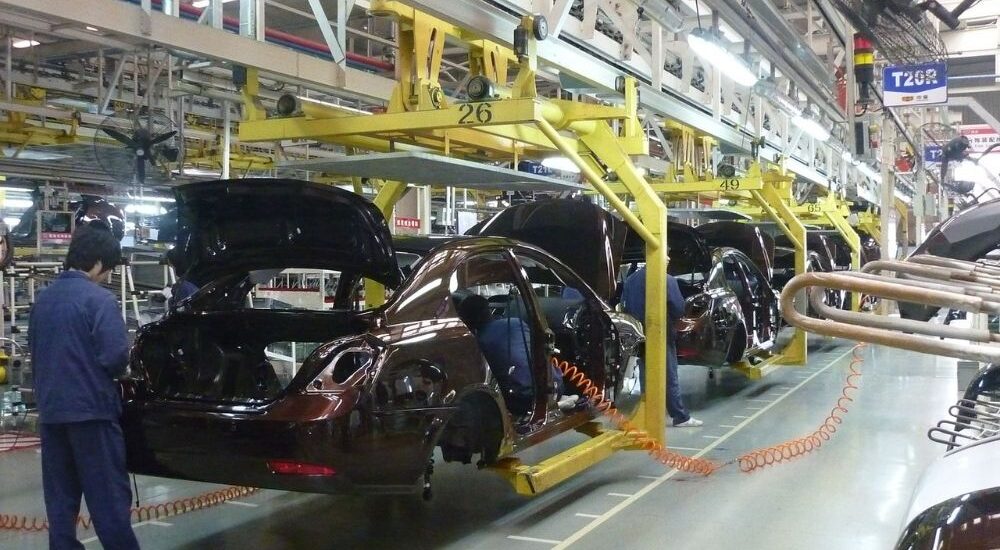
The Biden administration is set to offer $12 billion in grants and loans to help auto manufacturers and suppliers retrofit their plants to produce electric and advanced vehicles. The move aims to support the transition to electric vehicles (EVs) while ensuring that workers and communities are not left behind. The announcement comes amid concerns from automakers and the United Auto Workers (UAW) union about proposed environmental rules and the potential impact on jobs.
The UAW has expressed concerns that a rapid shift to EVs could put thousands of jobs at risk in states like Michigan, Ohio, Illinois, and Indiana. However, the policy announced by the Biden administration aims to address these concerns by supporting union partnerships and maintaining high pay and safety standards.
UAW President Shawn Fain welcomed the announcement, emphasizing the importance of strong union partnerships in the EV transition. President Biden stated that building a clean energy economy should benefit both auto companies and unionized workers.
The funding will include $3.5 billion for domestic battery manufacturers and $2 billion in grants from the Inflation Reduction Act, along with $10 billion in loans from the Energy Department’s Loans Program Office.
This initiative reflects the administration’s commitment to accelerating the adoption of EVs in the United States while safeguarding jobs and communities affected by the transition.
Interested in learning more?
Sign up for Top Insights Today

Top Insights Today delivers the latest insights straight to your inbox.
You will get daily industry insights on
Oil & Gas, Rare Earths & Commodities, Mining & Metals, EVs & Battery Technology, ESG & Renewable Energy, AI & Semiconductors, Aerospace & Defense, Sanctions & Regulation, Business & Politics.
Read more insights

India, Guyana set to sign 5-year MoU for collaboration in hydrocarbon sector
India has given approval for the signing of a 5-year memorandum of understanding (MoU) with Guyana to foster collaboration in the hydrocarbon sector, marking a significant step toward diversifying India’s sources of oil imports. The proposed agreement is expected to cover a range of areas…

Starmer aims to reset UK-EU relations with key diplomatic visits to Germany and France
British Prime Minister Keir Starmer is undertaking a significant diplomatic initiative to reset and strengthen the United Kingdom’s relationship with the European Union, focusing on key partnerships with Germany and France. During a two-day visit, Starmer aims to distance Britain from the strained relations left by the previous…
Trade war jolts copper flows but China’s grid investment keeps prices firm
The global copper market is tightening, despite growing concerns about a broader economic downturn driven by escalating trade tensions between the U.S. and China. In a striking divergence from typical market behavior, copper — long regarded as a barometer of global industrial activity — is seeing strong pricing momentum largely due to robust Chinese buying and constrained global supply.
Prices fell sharply in early April after President Donald Trump’s sweeping reciprocal tariff regime was announced, but they have since rebounded. Copper is now up more than 8% on the London Metal Exchange (LME) since the start of 2025, outperforming equity markets such as the S&P 500, which is down over 4%. Analysts note that the physical copper market looks tight, supported by persistent demand strength in China.