


Read Industry Insights
-

Copper’s physical supply crunch is colliding with financial market caution
Copper’s subdued trading reflects a market pulled between immediate shortages of available metal and doubts about the durability of the investment boom expected to support future demand. Tight supplies in China are encouraging buyers to pay unusually high premiums for imports, while weakness in artificial-intelligence stocks and the prospect of higher US interest rates are restraining investors’ appetite.
The result is a divergence between the urgency of physical procurement and caution in financial markets. In the Monday morning snapshot, copper rose 0.3% to $14,373 a tonne on the London Metal Exchange at 9:59 a.m. London time, following the previous week’s selloff.
October 26, 2026 -

Audi’s U.S. factory plans expose tensions between tariffs and German jobs
Audi’s proposed $4 billion factory in Georgia places its American growth strategy at the intersection of trade policy, German employment concerns and US electoral politics. Local production could strengthen the brand’s position in a major premium-car market and reduce exposure to import duties.
Announcing the project alongside Donald Trump at a campaign rally, however, has made the investment a political controversy before Volkswagen’s supervisory board has given its final approval. The planned facility would be Audi’s first US manufacturing site, with capacity to assemble up to 200,000 vehicles annually and approximately 4,500 projected jobs.
October 26, 2026 -
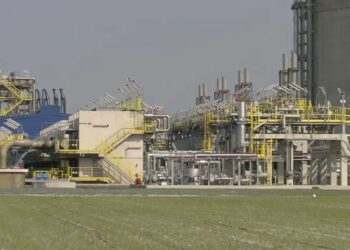
Germany is paying to preserve gas security through winter
Germany is paying to preserve access to gas later in the winter as relatively low storage levels reduce its margin for coping with prolonged cold or supply disruption. Trading Hub Europe has awarded contracts worth nearly €245 million, strengthening a standby mechanism intended to keep additional supplies available when the system may need them.
The decision highlights an important feature of energy security: gas must be available at the right time and location, rather than simply present somewhere in the wider market. The package includes approximately €107 million for special arrangements covering February and March 2027, alongside around €137 million for regular tenders used to address potential network bottlenecks.
October 26, 2026 -
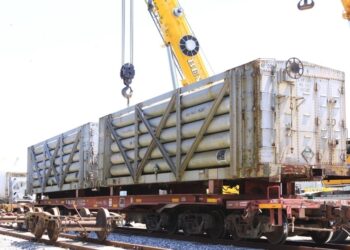
U.S. is turning helium supply into a national security priority
Washington’s decision to classify helium as a critical material brings an often-overlooked industrial gas into the centre of its manufacturing-security agenda. The concern is that access to advanced factories, sophisticated equipment and domestic mineral resources does not guarantee uninterrupted production if an essential processing input becomes difficult to obtain.
For semiconductor manufacturers and other high-technology industries, helium availability can become a constraint disproportionate to the material’s share of overall operating costs. The Department of Energy announced on October 23 that Energy Secretary Chris Wright had designated helium as critical under the Energy Act of 2020.
October 26, 2026 -
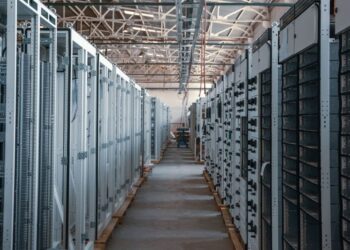
AI power race is moving beyond the grid toward on-site generation
The race to build artificial-intelligence infrastructure is turning electricity availability into a decisive competitive advantage. For US data-centre developers, securing land, financing and computing equipment is no longer sufficient if the power supply arrives years later. Fuel cells are attracting interest because they offer a potentially faster route to operating a facility, allowing developers to install generation close to their servers while larger electricity networks struggle to accommodate new demand.
Fuel-cell market revenues are projected to rise from approximately $2.8 billion in 2025 to around $30 billion by 2030 as data-centre demand expands. It is estimated that large electricity loads can face grid-connection waits of three to six years. The forecast that roughly 40% of projected US data-centre capacity could pursue dedicated on-site generation covers several technologies, however, rather than implying that fuel cells alone will supply that share.
October 26, 2026 -
China’s oil and gas strategy is shifting toward greater supply self-reliance
China is pressing its oil and gas industry to strengthen domestic production, signalling that dependable access to hydrocarbons remains a central national priority even as the country expands electrification and renewable energy. The directive reflects Beijing’s concern that a large industrial economy needs a secure domestic supply base alongside imported fuels, particularly when international markets and transport routes are vulnerable to disruption.
In a summary published on October 23 following an October 21 meeting, the National Energy Administration urged companies to increase investment, intensify exploration and accelerate the development of strategic production bases. Its objectives distinguish between the two fuels: crude output should rise steadily, while natural-gas production should expand more rapidly.
October 26, 2026 -

France’s fertilizer supply is becoming a casualty of its dispute with Algeria
The deterioration in relations between Algeria and France is threatening to reach French agriculture through an essential industrial input. Algeria has reportedly instructed producers to suspend urea exports to France, raising the possibility that a diplomatic dispute could complicate fertiliser purchases ahead of the next growing season.
The immediate concern is whether farmers and distributors will have to replace a significant source of supply in an international market already strained by high energy costs and disruption in the Middle East. Diplomats and industry representatives said instructions to halt shipments had circulated, while French fertiliser association Afcome and wheat growers’ organisation AGPB warned that Algerian supplies account for approximately 30% of France’s urea imports.
October 26, 2026 -

Bulgaria’s battery boom is reshaping the economics of Balkan electricity markets
Bulgaria’s rapid expansion of battery storage is strengthening its position in southeastern Europe’s electricity market. By saving part of the daytime solar surplus for evening consumption, the country has increased its ability to supply neighbouring grids when electricity is most valuable.
Its emerging reputation as the “Battery of the Balkans” reflects a broader change in energy security: the ability to deliver power at the right moment can be as important as the amount generated over an entire year. Supported by approximately €700 million in European Union grants, regulatory changes and private investment, Bulgaria has doubled its reported battery power capacity from around 3 gigawatts to 6 GW over the past year.
October 26, 2026
Couldn't see what your are looking for?
Type any keywords to search our insights database.
Also use regional and sectoral filters in the top menu bar.
Explore Our Services
Industry Insights
Elevate your business with QU4TRO PRO! Unlock the power of knowledge and gain access to comprehensive analysis, in-depth reports and market trends that will drive your business forward.
read more
Portfolio Management
Friend-shoring, onshoring, supplier diversification, sustainability. Companies have to adapt their operations to shifting market pressures and geopolitics in a fragmenting global economy.
read more
Corporate Consulting
The main challenge for businesses today is to find a way of achieving a sustainable competitive advantage in a market. Learn how we support you in gaining a leading edge competitive advantage.
read more
Government Relations
Without a comprehensive understanding of how politics affect your line of business in you home country or abroad, raeaching your objectives in a market have a slim chance.
read moreGet Top Insights Today