
Spain’s Repsol agreed to sell Canada assets to Peyto for $468 million
- September 7, 2023
- Posted by: Quatro Strategies
- Categories: Americas, Europe, Oil & Gas

Canadian natural gas company Peyto Exploration & Development has agreed to purchase Repsol’s assets in Canada for $468 million. This acquisition includes Repsol Canada Energy Partnership, which encompasses upstream oil and gas operations, along with related midstream facilities and infrastructure, primarily located in Alberta’s Deep Basin.
Peyto’s CEO, Jean-Paul Lachanc, expressed the strategic alignment of these assets with Peyto’s existing Deep Basin acreage. He noted that the acquisition offers numerous high-quality undeveloped locations that will immediately compete for capital within their portfolio. This deal is expected to close in mid-October.
Repsol’s decision to sell these assets is part of a broader strategy to focus its oil and gas production in specific countries, such as the United States and Brazil. Last year, the company sold a portion of its assets in Alberta to Teine Energy, a company backed by the Canada Pension Plan Investments Board.
The acquisition of Repsol’s Deep Basin assets will enhance Peyto’s production, adding approximately 23,000 barrels of oil equivalent per day (boepd), primarily comprising natural gas. This move strengthens Peyto’s position in the Canadian energy sector and aligns with its growth objectives in the region.
Interested in learning more?
Sign up for Top Insights Today

Top Insights Today delivers the latest insights straight to your inbox.
You will get daily industry insights on
Oil & Gas, Rare Earths & Commodities, Mining & Metals, EVs & Battery Technology, ESG & Renewable Energy, AI & Semiconductors, Aerospace & Defense, Sanctions & Regulation, Business & Politics.
Read more insights

China weaponizes “boring” chips; EU auto lines face stall risk
China just turned a seemingly humble corner of the chip world into a choke point, and Europe’s car industry can feel the vise tightening. By blocking Nexperia’s Chinese plants from exporting, Beijing has weaponized a supplier of basic but ubiquitous semiconductors that sit everywhere in a vehicle’s wiring loom: diodes, transistors, level shifters, power-management discretes, the inexpensive parts that number in the hundreds per car and that nobody notices until they’re missing.
Automakers and Tier-1s can carry more inventory than they did before the pandemic, but qualification cycles in auto electronics are measured in months, not weeks. If stocks only cover a few weeks, assembly lines that run on just-enough logistics will start to cough, then stall.
Japan’s LNG demand could surge if renewable expansion slows
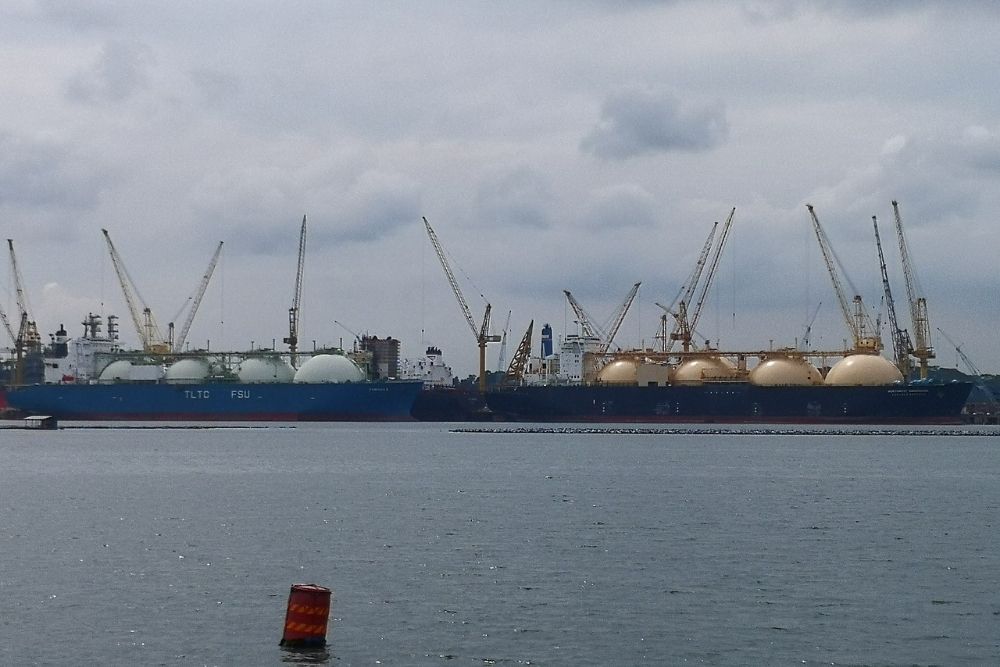
Japan’s demand for liquefied natural gas (LNG) could climb by more than 10% to 74 million metric tons by 2040, should the country struggle to expand its renewable energy capacity as planned, the Ministry of Economy, Trade, and Industry (METI) revealed. Japan’s LNG consumption has been on a gradual decline, falling 0.4% in 2023 to 66 million tons…
ExxonMobil returns to Libya after decade-long hiatus
Libya’s National Oil Corporation (NOC) announced on Monday that it has signed a memorandum of understanding (MoU) with ExxonMobil, signaling a cautious re-entry by the U.S. energy giant into the North African country after a ten-year absence driven by chronic instability.
The agreement focuses on carrying out detailed geological and geophysical studies in four offshore blocks, located off Libya’s northwest coast and within the prolific Sirte Basin, aimed at identifying and eventually exploiting new hydrocarbon resources.